Baby Leni: A Font That Breathes Personality into Handmade Designs
I was staring at the screen, a little weary after a long day of production, and my latest candle label design felt flat. It needed that final, beautiful flourish—a name that felt special, handwritten, but perfectly polished for my shop listings. That’s when I opened Baby Leni Script and typed the product name: “Gingerbread & Clove.” Suddenly, the mood was right. The swooping capitals and flowing lowercase letters transformed the label from a simple graphic into a piece of brand storytelling. It’s that moment of creative relief, finding the right tool, that makes Baby Leni such a valuable asset for any maker.
The Heart of Baby Leni: Elegance with a Touch of Whimsy
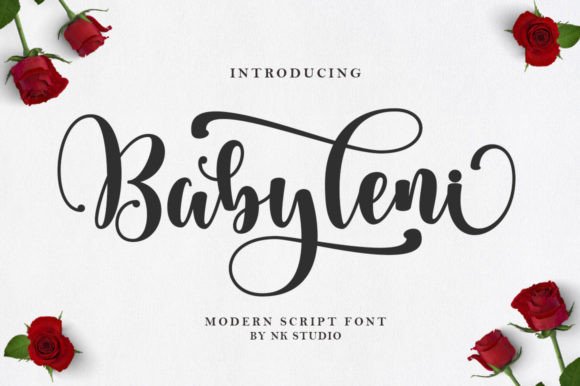
Baby Leni is, at its core, a beautiful script font. But its real charm lies in its personality. It’s elegant without being stiff, whimsical without being childish. It carries a modern, handwritten feel that feels both personal and professional—a perfect balance for crafters and small shop owners. The strokes are clean and fluid, offering a sense of premium quality that elevates any product it touches. This isn’t a frantic, messy handwritten font; it’s a deliberate, artful script that suggests care and attention to detail, which is exactly the perception we want our customers to have.
Bringing Products to Life: From Labels to Wall Art
I’ve tested Baby Leni across a range of real projects, and its versatility for handmade goods is impressive. For product labels, like my candles or honey jars, it adds a boutique feel instantly. The font shines when used for the product name or a short, evocative phrase. On wedding invitations or holiday greeting cards, the alternates and varied letterforms allow for beautiful customization of names and dates, preventing monotony and creating a truly bespoke look. When designing digital printables, like wall art or planner pages, Baby Leni as a title font establishes a warm, creative tone that pairs beautifully with simpler fonts for body text.
For physical merchandise, such as tote bags, mugs, or shirts, it performs well as a central design element. I recently used it for a series of farmhouse-style kitchen signs, and the script gave the short quotes (“Gather” and “Fresh Bread”) a lovely, hand-painted aesthetic in the mockups. It’s also excellent for shop branding itself: using Baby Leni consistently on your packaging tags, thank-you cards, and even your shop banner creates a cohesive, recognizable brand identity that customers begin to associate with your quality.
Understanding Readability and Practical Application
With any decorative script, practical application is key. Baby Leni is a display font, and it excels in that role. It’s ideal for:
- Short phrases and product names
- Titles and headings on invitations or wall art
- Decorative wording on packaging and tags
- Logo text or brand name for a creative business
For readability, especially on small items, I recommend a few considerations. On tiny stickers or very small product labels, ensure the text is a large enough point size so the elegant details don’t become muddled. When using it for cutting machines like Cricut or Silhouette, the clean lines generally weld well, but always do a test cut with intricate swashes or alternative characters. For longer paragraphs, like product descriptions on a tag or instructions, Baby Leni is not suitable. That text should be set in a clean, readable sans-serif or simple serif font.
Pairing Baby Leni for a Complete Design
A font never works alone. The magic happens in pairing. Baby Leni’s decorative nature needs a stable, readable partner for body text and supporting information. I consistently pair it with a clean, modern sans-serif font—something like a simple geometric sans—for all the practical text: prices, details, addresses, and longer descriptions. This creates a clear visual hierarchy: the beautiful script captures attention and emotion, while the sans-serif provides clarity and function. For a more classic, editorial feel, pairing it with a gentle serif font can also work beautifully for stationery suites or blog graphics.
When Baby Leni Might Not Be the Right Choice
Honesty in reviews is important. While Baby Leni is wonderfully versatile, there are uses where I would choose a different typeface. If your project involves very dense label information, like extensive legal disclaimers or technical specifications, a decorative script would hinder readability. Similarly, for interfaces or designs requiring high accessibility or very small, functional text (like navigation on a website mockup), a simpler font is better. Its strength is in beauty and display, not in utility for long-form content.
A Final Note for Commercial Creators
Before using any font for physical products, templates, or digital downloads you intend to sell, always verify the license. For Baby Leni, confirm that your intended use—whether for handmade goods to sell, printable files, or merchandise—is covered under its commercial license. Also, explore the included styles thoroughly. The availability of alternates, ligatures, and swashes is what makes a script font like this so dynamic. Testing these in your mockups allows you to create truly unique combinations, ensuring that your “Gingerbread & Clove” label doesn’t look like anyone else’s. That uniqueness, powered by a thoughtful font choice, is what sets a handmade brand apart.
In the end, Baby Leni isn’t just a font file; it’s a design tool that injects personality and perceived value into your work. From the moment it transforms a blank label into something special, it proves its worth as a staple in a maker’s creative toolkit.